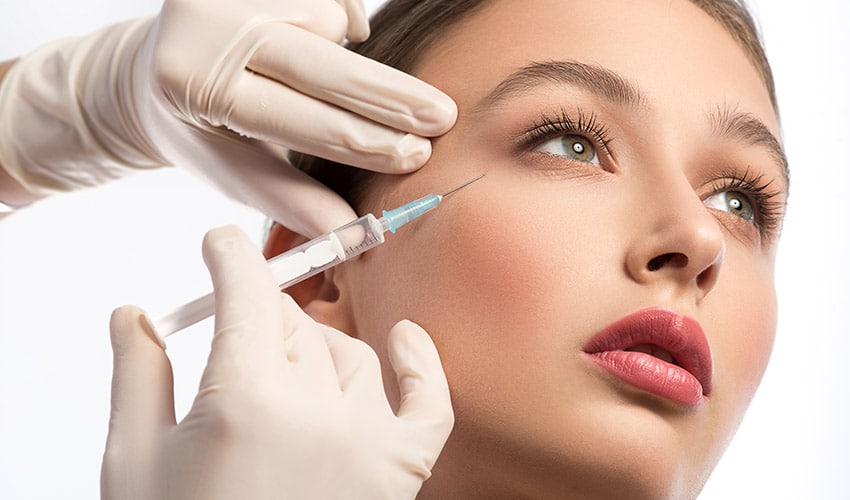
You want to soften your frown lines or your crow’s feet. Now you’re stuck choosing between two brand names that sound like they do the same thing.
Dysport and Botox are both forms of botulinum toxin type A. They relax the same facial muscles in the same way. Health Canada has approved Dysport for frown lines and crow’s feet. Botox carries that same approval, plus one more area, the forehead. The real differences are onset speed, how far each product spreads under the skin, and how precisely it can go near the eyes.
The clinical team offers Dysport treatment at True Roots Dental in Stony Plain. In Alberta, a dentist cannot legally offer it without a Level 2 certificate. The College of Dental Surgeons of Alberta calls this the Facial Esthetic Therapies and Adjunctive Procedures standard. That’s not a marketing detail. The College treats botulinum toxin as a Schedule 1 drug under its own rules, and a dentist cannot legally buy or inject it without that certificate on file.
Key takeaways if you’re deciding between Dysport and Botox
- Health Canada approves Dysport for frown lines and crow’s feet. Botox covers those two areas plus the forehead.
- A 90-patient study in the Archives of Facial Plastic Surgery found Dysport rated more effective for crow’s feet while smiling. At rest, the two looked about the same.
- Both typically last three to four months. A Dysport appointment at True Roots Dental usually runs 10 to 20 minutes, with results showing within 24 hours to a few days.
- Dysport spreads a little further under the skin than Botox. That can help on a broad area like the forehead, but it calls for careful placement near the eyes.
- A consultation with the clinical team can confirm which option fits your face and your goals before you book.
What actually differs between Dysport and Botox?
Dysport tends to suit people whose main concern is the vertical lines between the eyebrows. That was its first Health Canada approval, and it has the longest track record here. Botox tends to suit people who want the forehead, the frown lines, and the crow’s feet addressed in one visit. Its label covers all three areas. Neither product wins across the board. The right choice depends on which areas you’re treating and how your injector reads your own face.
A consultation, not a brand preference, shapes the plan your dentist builds for you. Both treatments are cosmetic, so neither falls under what the Canadian Dental Care Plan covers, the same way teeth whitening and veneers don’t. Most patients pay out of pocket, or through an extended health plan with a cosmetic rider.
Dysport: Health Canada’s original frown-line treatment
Dysport is a brand name for a form of botulinum toxin type A. Health Canada first approved it for moderate to severe frown lines in adults under 65. The approval later expanded to cover crow’s feet. A 335-patient trial found it worked better than a placebo at reducing crow’s feet lines.
At True Roots Dental, a Dysport appointment runs 10 to 20 minutes. Most patients notice initial changes within 24 hours to a few days. The full effect settles in over the following two weeks. Results typically last up to four months before muscle activity returns and the lines reappear.
Dysport spreads a little further from the injection point than Botox does. Over a broad area like the forehead, that spread can mean fewer injection points for a smooth result. Near the eyes, where crow’s feet form, that same spread calls for a practised, careful hand. That precision is what the Level 2 certification confirms before a dentist offers the treatment at all.
Botox: the broader label of the two
Botox is a brand name for a different formulation of botulinum toxin type A. Health Canada has approved it for glabellar lines, crow’s feet, and forehead lines. That’s the broadest cosmetic label of the two products in Canada right now.
Botox tends to stay closer to the injection site than Dysport. That gives an experienced injector tighter control over a small, defined area. Some dentists prefer Botox around the eyes for that reason. A few millimetres of unwanted spread there can affect eyelid position.
Duration runs close to Dysport’s, typically three to four months. The two products are not dosed the same way. Dysport typically needs about three units to match one unit of Botox. Unit counts on a treatment plan aren’t directly comparable between the two.
Dysport and Botox, side by side
Side by side, the practical differences are easier to see than a paragraph can show.
| Dysport | Botox | |
| Active ingredient | abobotulinumtoxinA | onabotulinumtoxinA |
| Health Canada approved for | Frown lines, crow’s feet | Frown lines, crow’s feet, forehead lines |
| Typical onset | A few days | A few days, sometimes slightly slower |
| Typical duration | Up to four months | Roughly three to four months |
| Spread under the skin | Wider | Tighter |
| Dosing | About three units per one Botox unit | Fewer units, higher potency per unit |
Is Dysport actually better for crow’s feet?
The honest answer is that it depends on how you measure it. A 90-patient split-face study published in the Archives of Facial Plastic Surgery tested both products at once. Each participant received Dysport on one side of the face and Botox on the other. While smiling, both physicians and patients rated the Dysport side as more improved. At rest, the study found no meaningful difference between the two.
That’s one study, not a universal verdict. It points to a real edge for Dysport in that one trial, while smiling. It doesn’t mean Dysport works better for every patient or every injector. Your own muscle pattern, and how strongly you smile, both change the picture.
What does Dysport or Botox cost at True Roots Dental?
Neither product’s price appears on True Roots Dental’s website. That’s typical across the industry. Cost depends on how many units your treatment needs, not a flat fee per area. Because Dysport typically needs about three units for every one Botox unit, a Dysport plan often shows a higher unit count. The total cost still lands in a similar range either way.
Most extended health plans treat both products as cosmetic and exclude them. A plan with an aesthetics rider is the exception, not the rule. If cost matters to your decision, ask about it at your consultation. Don’t guess from a price list online. True Roots Dental also offers in-house financing options for patients spreading out the cost of any treatment, cosmetic or otherwise.
Can you switch between Dysport and Botox?
Yes. Both are forms of botulinum toxin type A. Moving from one to the other is a routine conversation with your injector, not a medical risk on its own.
What changes is the math, not the outcome. Since the two aren’t dosed unit for unit, your dentist recalculates the plan. It isn’t a simple swap at the same number. If Dysport spread further than you liked near your eyes last time, say so. If Botox left your forehead less relaxed than you wanted, say that too. That feedback shapes your next appointment.
Booking a Dysport consultation in Stony Plain
Stony Plain and Spruce Grove patients booking a first Dysport appointment get the same careful approach used for every treatment at True Roots Dental. Your dentist looks at how your muscles move at rest and at full expression. Then you talk through which areas matter most to you. Together, you build a plan around Health Canada’s approved uses for the product you choose.
Call True Roots Dental in Stony Plain at (780) 963-4885, or book a Dysport consultation online. The clinical team will walk you through what to expect before you commit to anything.