
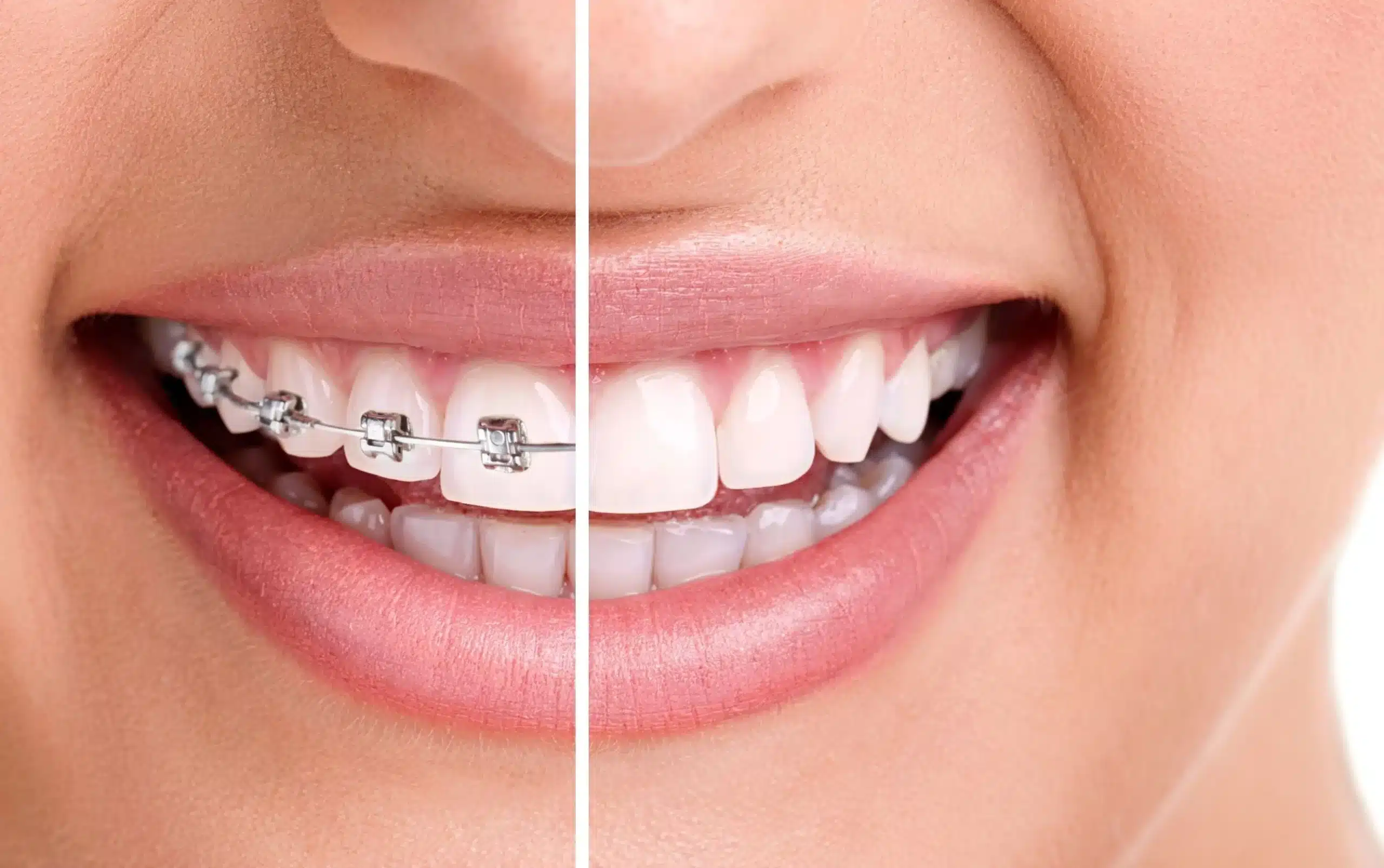
Crowded or gapped teeth are easy to live with. Then you decide to fix them, and one question comes up first: Invisalign or braces? Both can straighten a smile. They are not interchangeable. Picking the wrong one for your case wastes months and money.
The real dividing line is not personal preference. It is how severe your crowding or spacing actually is. Invisalign aligners correct mild to moderate crowding well. They also handle most spacing gaps predictably. Traditional braces still do more reliable work on severe crowding, major tooth rotations, or a crowding case layered on top of a bite problem.
Patients considering Invisalign at True Roots Dental start with an in-person assessment, not a mail-order impression kit or an online quiz. At True Roots Dental in Stony Plain, Dr. Rahim Ali has practiced general and restorative dentistry since 2005. He personally examines every Invisalign case before recommending it. That in-person check tells a patient whether aligners will work for their bite, or whether braces are the safer bet.
Key Takeaways if You’re Weighing Invisalign Against Braces
Here is the short version before the details below.
- Invisalign works best for mild to moderate crowding and most spacing gaps. Braces remain the more predictable option for severe crowding or a complex bite correction.
- Invisalign aligners need 20 to 22 hours of wear a day to stay on schedule. Braces keep working whether or not a patient remembers them.
- Treatment can run anywhere from about 6 months to 2 years with either option. The exact time depends on how much movement the teeth need.
- The Canadian Dental Care Plan does not typically cover purely cosmetic orthodontic correction. Most adult Invisalign cases for crowding or spacing fall into that category.
- The real next step is a candidacy assessment, not a guess from the mirror.
Is Invisalign Strong Enough to Fix Crowded or Gapped Teeth?
Yes, for most cases. Invisalign aligners shift teeth using a custom series of clear trays. They handle mild to moderate crowding well. They handle most spacing gaps well too. The Canadian Association of Orthodontists says clear aligner suitability depends on the case. That is why an in-person check matters more than the brand name on the tray.
Mild crowding usually means one or two teeth slightly overlapped or turned. There is often just a millimetre or two of missing space along the arch. Aligners handle that kind of movement well.
Each tray shifts teeth by a small amount before the next tray takes over. Spacing works the same way in most cases. Spacing means gaps between teeth from natural tooth size or missing contact, and aligners close those gaps gradually and predictably.
Moderate crowding, where several teeth compete for room, still often responds to Invisalign. Treatment usually takes longer for these cases. It may also need one extra step: filing a small amount of enamel between teeth to make room. Dentists call this interproximal reduction.
Most Invisalign cases for crowding or spacing count as cosmetic care, not a medical need. Patients who want to know their financing options can look at True Roots Dental’s in-house financing before they commit to a plan.
When Do Braces Still Win Over Invisalign?
Braces remain the more reliable option for severe crowding. That usually means three millimetres or more of missing space along the arch. Braces also tend to win when crowding comes with a bite problem, such as a bigger overbite or crossbite. Braces stay fixed to the teeth the whole time. They do not depend on a patient remembering to wear anything.
Severe cases sometimes need more than simple tooth movement. Braces paired with a tool like an expander can open up space that aligners alone cannot reach. So can a planned extraction, though that is less common. Complex rotations are another example. When a tooth needs to turn most of the way around, the steady, fixed pressure of braces tends to work better than aligner trays.
None of this rules Invisalign out for a hard case on its own. Aligner trays keep getting better. Some practices manage moderate to severe crowding with added attachments and extra trays partway through treatment. Still, the real answer for your mouth comes from an assessment. It does not come from picking whichever option sounds easier at the time.
Invisalign vs Braces for Crowding and Spacing, Side by Side
Here is how the two options compare on the questions patients ask most often.
| Factor | Invisalign | Braces |
| Best for | Mild to moderate crowding, most spacing | Severe crowding, complex rotations, bite issues |
| Daily commitment | 20 to 22 hours of wear a day | None, fixed in place the whole time |
| Visibility | Clear, removable trays | Visible metal or ceramic brackets |
| Typical treatment time | About 6 months to 2 years | About 1 to 2.5 years, longer for complex cases |
| Diet and hygiene | Remove trays to eat and brush normally | Some food limits, more careful brushing and flossing |
| Adjustments | New tray roughly every 1 to 2 weeks | In-office adjustment about every 4 to 8 weeks |
What Does Treatment Cost, With or Without Coverage?
Cost tracks with how much work a case needs. It does not track with the brand of aligner or bracket. Invisalign and braces often land in a similar price range for similar cases. A longer or harder treatment plan simply costs more, no matter which option a patient picks. Extended health plans that cover orthodontics usually treat the two options the same way. Ask your provider what your plan covers before you book, since the details vary widely from plan to plan.
Straightening teeth for looks alone generally sits outside Canadian Dental Care Plan coverage. Most adults fixing crowded or gapped teeth for appearance pay out of pocket or through extended health benefits instead. A smaller group of cases qualify because of a real medical reason, not looks alone, so it is worth asking rather than assuming either way.
True Roots Dental is a registered CDCP direct-billing provider for the services CDCP does cover. The practice also offers its own financing plan, which spreads either treatment’s cost over time instead of one large payment up front.
How Dr. Ali Decides Which Option Fits Your Case
Every Invisalign case at True Roots Dental starts the same way. Dr. Ali examines the teeth, the bite, and the specific movement a patient wants. Then he explains plainly whether aligners can do that work, or whether braces would give a more predictable result. Twenty years of clinical experience means he has seen what actually finishes on schedule and what does not.
Age on its own does not rule anyone out. What matters is healthy gums, enough bone support, and teeth that can still move safely. Dr. Ali checks those things at the consultation itself, whether a patient is in their twenties or their sixties.
If Invisalign will not fully correct a case, Dr. Ali says so before treatment starts, not partway through it. That might mean recommending braces outright. It might also mean a referral for a more complex bite correction, run alongside aligner treatment. Either way, the goal is a plan that actually finishes on time, not one that stalls out six months in.
Patients can read more about Dr. Ali’s background in general and restorative dentistry before their consultation. That way, the assessment feels like a continuation of something familiar, rather than a first meeting with a stranger.
Getting Your Case Assessed in Stony Plain
Guessing at severity from a bathroom mirror will not tell you which option fits. An assessment will. Patients from Stony Plain, Spruce Grove, and Parkland County can book a consultation with Dr. Ali at True Roots Dental.
He will look at the specific crowding or spacing involved. He will also check the bite and the surrounding teeth before recommending anything. That visit results in a plan based on what your mouth actually needs, not a generic checklist from a website.
Call True Roots Dental at (780) 963-4885, or book a consultation online, to get a straight answer instead of a guess.