Most people expect wisdom tooth problems to arrive loudly. Severe pain, a swollen jaw, real trouble opening the mouth. Those things do happen, but they’re usually the late presentation of a situation that started quietly, sometimes years earlier.
The early signs are easy to miss. And because they’re easy to explain away, the tooth often causes damage that’s harder to address by the time anyone pays attention.
Four situations worth taking seriously
Recurring soreness at the back of the jaw
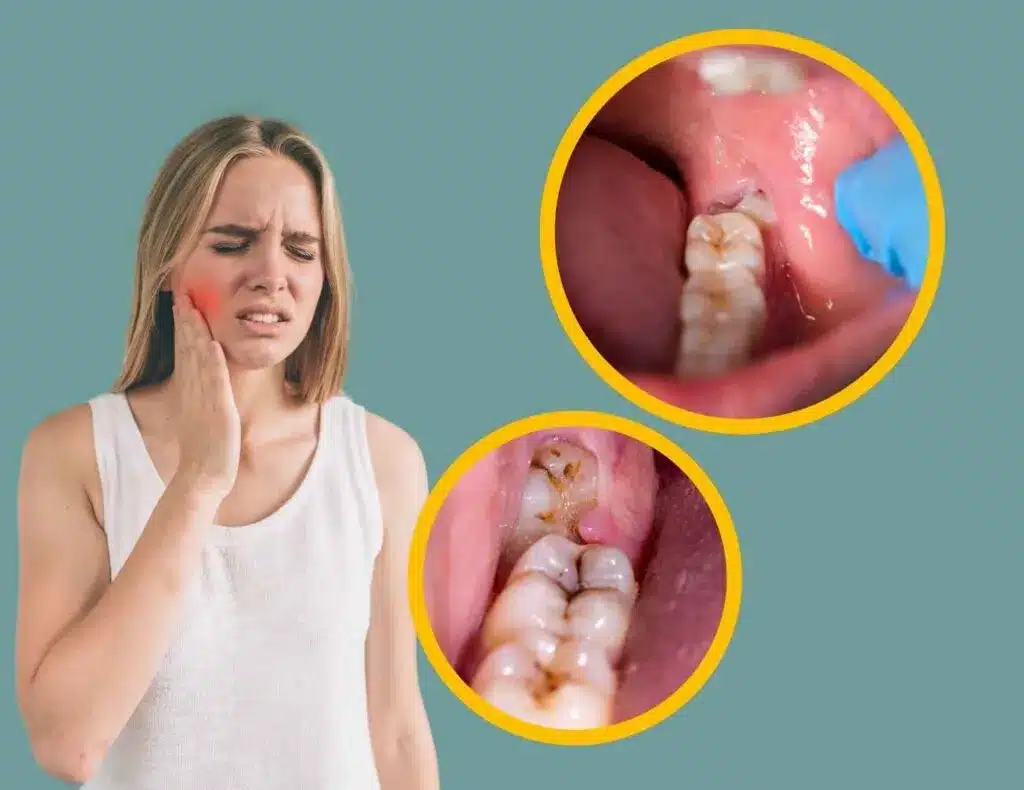
Not constant, not debilitating. Just a periodic ache in the last molar area that comes and goes. This pattern often comes from a partially erupted wisdom tooth cycling through phases of gum inflammation and settling. The tissue around a partially emerged tooth creates a pocket that traps food and bacteria, causing a localized infection called pericoronitis. It resolves. Then it comes back. Each episode is a signal that the situation isn’t stable, even if it doesn’t feel urgent.
Gum swelling behind the last molar
Tissue that looks puffy or red behind the second molar, even without much pain, suggests the wisdom tooth is pushing through in a way that’s affecting the gum. Worth noting if it shows up on one side but not the other, or gets worse after eating certain foods.
Difficulty cleaning the very back teeth
When a partially erupted wisdom tooth sits at an angle the toothbrush can’t reach around, plaque builds up behind the second molar. Some patients notice that area feels different when they run their tongue across it. Others hear about it from their hygienist, who keeps finding buildup at the back despite regular brushing. An impacted or angled wisdom tooth can accelerate decay on the back surface of the second molar, and that decay arrives silently before it becomes a visible or painful problem.
Shifting of the front teeth in adulthood
The relationship between wisdom tooth pressure and front tooth crowding is genuinely debated in dental research. It’s not a clean cause-and-effect in every patient. But when someone notices their front teeth shifting in their twenties or thirties with no clear explanation, and a wisdom tooth is partially impacted, it’s worth bringing it up with the dentist. The pressure from an erupting wisdom tooth can contribute to movement in the teeth ahead of it.
What an X-ray shows that a visual exam doesn’t
A lot of the damage wisdom teeth cause is below the gumline before it becomes visible. A wisdom tooth angled toward the root of the second molar erodes that root from behind. A wisdom tooth with a cyst developing around its crown expands quietly in the jawbone. Neither of these shows up in a mirror.
X-rays are what actually tells the clinical story. At True Roots Dental in Stony Plain, digital X-rays are used to assess the position, angle, and relationship of wisdom teeth to surrounding structures. A panoramic image shows all four wisdom teeth at once and gives the dental team a clear view of whether they’re erupting normally, impacted, angled against adjacent teeth, or sitting in a position likely to cause trouble.
Patients who have never had their wisdom teeth assessed on X-ray, or who had an assessment years ago, may not have an accurate picture of the current situation. Wisdom teeth don’t always stay in the same position. Some shift or change orientation as the jaw continues developing through the mid-twenties.
When removal makes clinical sense
Removal isn’t automatic. Some wisdom teeth erupt fully, sit in a position that can be cleaned, and cause no problems. Those don’t need to come out just because they’re wisdom teeth.
The case for removal is clearer when the tooth is impacted and unlikely to reach a cleanable position; when it’s angled in a way that puts the second molar’s root at risk; when decay has already started on the second molar’s back surface; when pericoronitis has occurred more than once; or when a cyst is forming around the tooth.
Timing matters too. Wisdom tooth removal in the late teens and early twenties, when roots are not yet fully formed and bone is less dense, tends to mean an easier recovery than removal in the thirties or forties when the roots are established and the bone is more compact. Earlier assessment generally means more options.
For patients who feel anxious about dental procedures, sedation dentistry is available at True Roots Dental to make the experience more manageable.
What to do if any of this sounds familiar
A painful episode isn’t required before calling the dentist. Periodic soreness at the back of the jaw, gum changes behind the last molar, or front teeth that seem to be moving are all reasonable reasons for an appointment and an X-ray. Getting a clear picture of what the wisdom teeth are doing is considerably easier than managing the problems they can cause if left unmonitored.
Dr. Rahim Ali and Dr. James Quon assesses wisdom teeth as part of regular dental check-ups and can schedule a specific assessment for patients who have concerns.
True Roots Dental | Stony Plain, AB
If any of the signs in this post sound familiar, calling sooner makes more sense than waiting.
Reach True Roots Dental at (780) 963-4885, or visit the clinic at 4305 S Park Dr #400, Stony Plain. Dr. Ali and Dr. Quon welcome new patients from Stony Plain, Spruce Grove, and Parkland County. The Canadian Dental Care Plan (CDCP) is accepted, and direct billing is available to most insurance providers.