Gum recession puts dentists in a genuinely tricky spot. A cavity has a clear threshold: it’s there, or it isn’t. Recession doesn’t work that way. A small amount of gum pulling away from the tooth root is a completely different situation from a significant recession exposing several millimetres of root surface. And the question of when to treat versus when to keep watching doesn’t have one answer that fits every patient.
What it does have is a logical framework. Here’s how that decision actually gets made.
What recession is and why it matters
The gum tissue sits like a collar around each tooth, covering the root and protecting the bone beneath. When that tissue recedes, several things happen at once. The root surface becomes exposed. Root structure is softer and more porous than enamel, which makes it more vulnerable to decay and temperature sensitivity. The bone underneath the receded tissue often begins to follow, reducing structural support around the tooth. And once gum tissue is lost, it does not grow back on its own.
That last part shapes the whole monitoring versus treatment conversation. Recession that progresses takes tissue that cannot come back without surgery.
When monitoring makes sense
Not all recession is actively getting worse. Some patients have had the same small amount of gum pull-back for years with no signs of change. In those cases, monitoring at regular appointments, combined with addressing whatever caused the recession in the first place, is a reasonable plan.
The most common causes are aggressive brushing technique, naturally thin gum tissue, gum disease, and orthodontic forces moving teeth outside the bone envelope. When the cause can be dealt with switching to a softer brush and gentler technique, for example and the recession is mild and holding steady, monitoring has real merit.
But monitoring means something specific. It means measurements taken at every hygiene appointment, a record of whether the tissue level is changing, and a clear plan for what happens if it does. It is not just leaving things alone and hoping for the best.
When the math changes
A few things shift the decision toward treatment.
Progression. If measurements over two or three appointments show tissue continuing to pull back, waiting means grafting a larger area later. The procedure gets more involved, and the tooth spends more time with its root surface exposed and unprotected.
Sensitivity that affects daily life. Exposed root surfaces can make eating, drinking, and brushing uncomfortable enough that patients start avoiding the area. That’s a problem. Plaque accumulates exactly where the tissue is already compromised, and the situation gets harder to manage.
Thin remaining tissue. Some people have naturally thin gum tissue with less reserve. When the band of attached gum gets narrow, what’s left is at real risk of being lost entirely. At that point, grafting is about protecting what remains, not replacing what’s already gone.
Before orthodontic treatment. Recession plus tooth movement is a combination worth taking seriously. If a patient has an existing recession and is about to start Invisalign or other orthodontics, the forces involved can accelerate things. Grafting before treatment starts is a timing conversation worth having.
Visible recession on front teeth. Recession that changes how the smile looks is a reasonable thing to address, not a purely cosmetic indulgence. Exposed root surfaces also stain more readily than enamel, so the appearance concern tends to grow over time.
At True Roots Dental Dentist Stony Plain assesses gum recession as part of routine hygiene appointments. If your measurements are stable, they’ll tell you. If something is changing, you’ll know that too.
What gum grafting involves
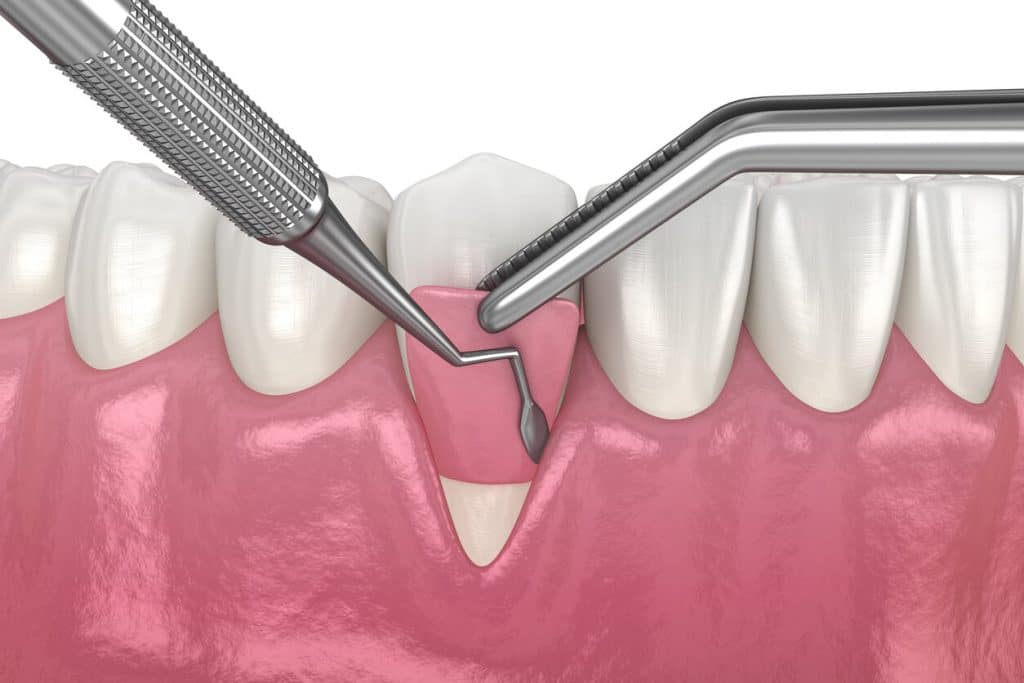
A gum graft takes tissue from one source and places it at the recession site to rebuild the gum level. The tissue usually comes from the palate, a small strip removed from the roof of the mouth under local anesthetic. In some cases, processed donor tissue is used instead.
The procedure is done under local anesthetic. Most patients return to normal activities fairly quickly, though soft foods and careful hygiene around the graft site are needed during healing. The graft integrates with the surrounding tissue over several weeks.
A successful graft restores coverage over the exposed root surface, reduces sensitivity, and creates a more stable tissue environment. For patients who have been managing sensitivity and discomfort for a long time, the change tends to be noticeable.
The problem with waiting too long
A recession that has progressed significantly and taken bone with it is a more complex grafting situation than a recession caught earlier. The procedure may need to cover a larger area, the achievable coverage may be less complete, and any bone loss alongside the recession may need separate attention.
Monitoring works when someone is actually monitoring. It stops working when appointments stretch out, measurements go untaken, and recession moves quietly forward. Patients who know they have some recession but haven’t had it measured in a while are worth getting in for a dental check-up.
True Roots Dental | Stony Plain, AB
If you have been told you have some recession, or you have noticed sensitivity along the gumline, a proper assessment is the right next step.
True Roots Dental is at 4305 S Park Dr #400, Stony Plain. Call (780) 963-4885 to book with Dr. Ali or Dr. Quon. The clinic accepts the Canadian Dental Care Plan (CDCP) and offers direct billing to most insurance providers. New patients from Stony Plain, Spruce Grove, and Parkland County are welcome.