
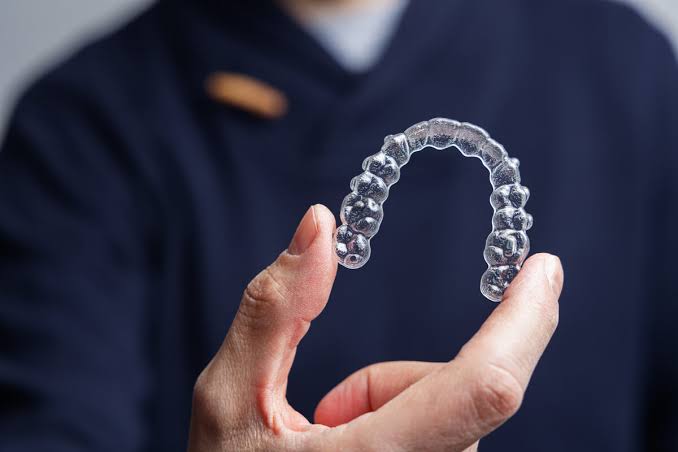
A dentist reviews several things before recommending clear aligners, and knowing them in advance can make the visit feel easier. Your assessment is the place to get those answers.
Invisalign can be a good option for many adults with healthy teeth and gums who want to improve crowding, spacing, or a bite concern. At your assessment, Dr. Rahim Ali will look at your teeth, your bite, and your smile goals. He may suggest treating a cavity or a gum concern first. Your assessment shows whether aligners suit your smile.
Dr. Ali is a general dentist with more than 20 years of clinical experience, and he provides Invisalign at True Roots Dental in Stony Plain. He starts each case by reviewing your teeth, bite, and goals. You can read about Invisalign treatment at True Roots Dental before your visit.
Key takeaways before your Invisalign assessment
- Dr. Ali reviews your teeth, your bite, and your smile goals before planning any aligners.
- Most aligner plans ask you to wear them about 20 to 22 hours a day, so your routine is part of the conversation.
- Your dentist usually treats cavities and gum concerns first, so tooth movement can begin on a healthier base.
- Treatment commonly runs from about 6 to 24 months, depending on how far your teeth need to move.
- A short visit gives you time to ask about timing, cost, and daily wear.
What does Dr. Ali check at your Invisalign assessment?
Dr. Ali will typically review three things at your assessment: your teeth and bite, the health of your gums and the bone beneath them, and your smile goals. Each one answers a different question. Together they show how much movement your teeth may need and whether any dental care should come first.
What does Dr. Ali look for in your teeth and bite?
Many people notice crowding or gaps by eye. Dr. Ali looks at those too, along with how each upper tooth meets the lower tooth it touches. Spacing and mild to moderate crowding are concerns that aligners often handle well. A bite that sits far out of line may point toward another approach, and Dr. Ali will talk that through with you. If you are still deciding between aligners and braces, you can read whether Invisalign or braces suits your crowding or spacing. It explains how the severity of a case can change the answer.
Your gums and the bone beneath them
Teeth move through bone, so healthy gums and bone matter. Dr. Ali will check your gums, and our team takes dental X-rays based on clinical need rather than as a routine. X-rays can show bone changes and cavities between teeth that a visual exam cannot. Healthy gums also hold your teeth steady while they move, so this step helps keep treatment comfortable and predictable.
How do your goals and daily routine fit in?
You will talk about what you would like to change and by when. A timeline matters to some people and not to others, and both are perfectly fine. Aligners only work when you wear them, so Dr. Ali will also ask how the daily routine would fit with your schedule.
Who is a good fit for Invisalign?
Invisalign is often a good fit for adults with healthy gums, no active decay, and a mild to moderate concern such as crowding, spacing, or a minor bite issue. Most people also have all of their adult teeth in place. Wearing the aligners for most of the day matters as much as any of these, and it is a good topic to raise early. Your dentist will explain which of these points apply to you.
Bone levels, hidden decay, and the way your bite fits together are all invisible in a mirror. Those details help your dentist plan tooth movement that is safe and predictable. They are also why an in-person visit gives you a clearer answer than any online checklist.
Can you have Invisalign with fillings, crowns, or gum concerns?
Fillings and crowns generally do not prevent Invisalign, because your dentist can plan around existing dental work. Gum concerns call for a different approach. Dentists usually treat active gum disease first, since moving teeth with weakened support can cause harm.
If your gums need care, our gum care treatments can help bring them back to health before aligners begin. Age on its own does not decide anything either. Healthy gums and bone usually matter far more than a birthday.
Situations that can change the timing or the plan
Some situations mean treatment begins later, and a few mean another option may fit better. Your dentist can address most of these, and none is a permanent no. Your dentist will explain which ones apply to you and what the next steps would be.
- Active gum disease, which needs treatment before teeth move
- Untreated cavities, which need fillings first
- A bite that sits far out of line, where braces may give a more predictable result
- Missing or partly erupted teeth that change how aligners fit
- Difficulty wearing aligners for most of the day
Taking care of these first often gives the aligners a healthier foundation to work from.
What does wearing Invisalign involve each day?
Most Invisalign plans ask you to wear your aligners about 20 to 22 hours a day. You take them out only to eat, drink anything other than water, brush, and floss. Steady wear helps treatment stay on schedule.
You change to a new set of aligners as your plan moves forward. Pressure or tenderness is common when you switch sets, and it usually means the aligners are working. If a full day of wear feels hard to fit into your routine, you can say so at your assessment, and your dentist can talk through the options with you.
How soon treatment can start after your assessment
Timing depends on what the assessment shows. With healthy teeth and gums, the next step is usually planning your aligners. If you need a filling or gum care first, that care usually comes before any teeth move. Dr. Ali will review your estimated timeline with you at your consultation.
Once aligners begin, treatment commonly runs from about 6 to 24 months. The length depends on how far your teeth need to move and how steadily you wear the aligners. You can read about Dr. Ali’s background before you meet him.
Booking an Invisalign assessment in Stony Plain
Patients from Stony Plain, Spruce Grove, and Parkland County visit our office at 4305 S Park Dr #400 for Invisalign assessments. Many people find it helpful to bring questions about timing, cost, and daily wear.
Invisalign for straightening is a cosmetic treatment, and the Canadian Dental Care Plan does not cover purely cosmetic orthodontics. Our team offers direct billing to most insurance providers, along with in-house financing plans that spread the cost over time. We can also help you understand your own coverage.
Whether you feel close to deciding or still unsure, a short visit with True Roots Dental gives you a plan built around your own teeth, along with time to ask anything on your mind.
When you are ready to see how aligners could fit your smile, call Dr. Ali and our team at (780) 963-4885 or book an Invisalign assessment.