There’s a version of soft tissue dental treatment most people are familiar with: a scalpel, sutures, a recovery period, and a follow-up visit to remove the stitches. For many procedures, that’s still how it works in practices without laser capability. Laser dentistry offers a different path for a number of these treatments, and understanding how it works helps explain why the patient experience can differ so noticeably.
The distinction isn’t about equipment for its own sake. It comes down to how tissue responds to each approach.
Why soft tissue responds differently to a laser
When a scalpel cuts through gum tissue, it severs blood vessels immediately. Bleeding begins at once. The site needs sutures, and healing follows the same sequence as any wound: clotting, inflammation, and gradual tissue regeneration over days or weeks.
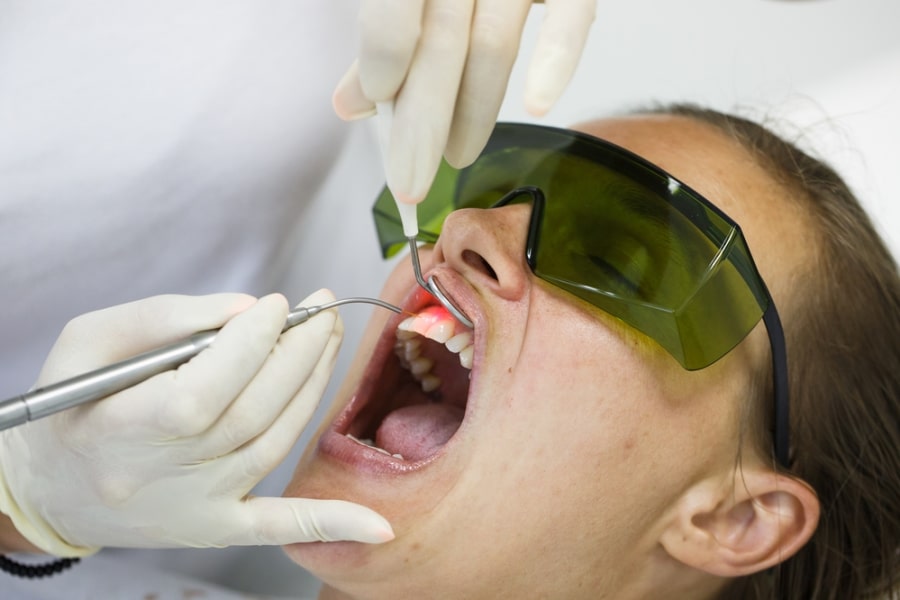
A dental laser works through a different mechanism. The beam emits focused light energy at a wavelength calibrated to interact with water in soft tissue cells. When it contacts the tissue, it removes cells by effectively vaporizing the water they contain. At the same time, it seals the blood vessels in the treated area and reduces the bacterial load at the site.
Several things follow from this:
- Less bleeding during the procedure, because vessels are sealed as the laser works
- Reduced post-procedure bleeding and swelling, because tissue disruption is more controlled
- Less need for sutures in most soft tissue laser applications
- Lower infection risk, because the bactericidal effect of the laser energy acts on the treatment site
These aren’t marketing points. They’re the expected outcomes of how laser energy interacts with tissue biology.
What this looks like for specific procedures
Gum recontouring
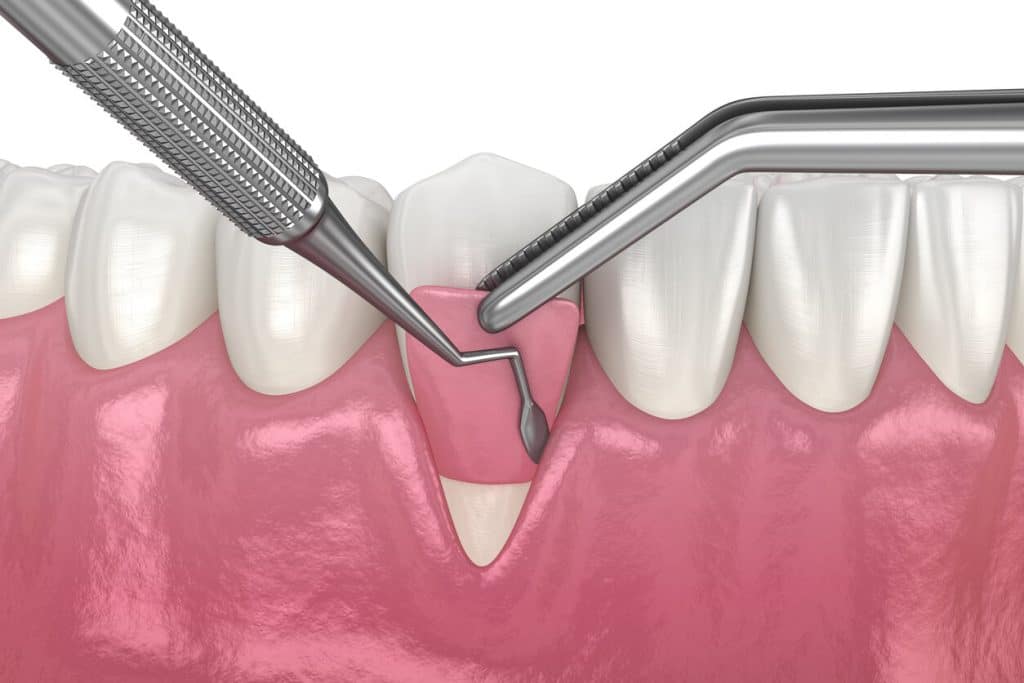
When the gumline is uneven or sits too low over the teeth, the laser removes excess tissue precisely and seals as it goes. Compared to scalpel-based gum procedures, recovery tends to be noticeably different. Most patients experience minimal post-procedure bleeding and heal without the prolonged tissue soreness that can follow conventional soft tissue surgery.
This is also relevant for patients preparing for cosmetic work. Someone who needs gum reshaping before porcelain veneers or other cosmetic treatment isn’t looking at a long wait between procedures. The healing timeline is considerably shorter than with traditional approaches.
Periodontal pocket treatment
Gum disease causes pockets to form between the gum and root surface. Laser treatment can remove diseased tissue from these pockets and reduce bacterial load in the area without incisions into surrounding healthy tissue. For patients who have been managing gum health over time and need something less disruptive than conventional surgery, laser-assisted therapy changes what that treatment involves.
At True Roots Dental in Stony Plain, laser dentistry is part of a broader range of services that Dr. Rahim Ali and Dr. James Quon integrate based on what fits each patient’s situation. It’s not applied by default. The team assesses the concern first and explains whether laser treatment is the right approach before any work begins.
Canker sore and ulcer treatment
This is probably the quickest application most people haven’t heard of. A low-level laser applied to an active canker sore can reduce discomfort and shorten healing time. The appointment takes a few minutes. For anyone who gets recurrent ulcers and has always just waited them out, this is worth knowing is available.
Frenectomy
A frenectomy releases a tight frenum, the band of tissue connecting the lip or tongue to the gum or floor of the mouth. With laser technique, there are no incisions and no sutures, and healing tends to be faster than with conventional surgery. This applies to both adults and children, and for infants and toddlers where minimizing trauma and speeding recovery are particularly important.
Tissue exposure for erupting or unerupted teeth
When a tooth hasn’t emerged properly or needs to be accessed for orthodontic treatment, laser removal of the overlying tissue is clean and heals quickly. Suture removal appointments are generally not required.
What patients tend to notice most
What changes most for patients is what doesn’t happen. No stitches to take out. No significant bleeding to manage at home. In many laser procedures, the post-appointment experience is mild: some tenderness at the site for a day or so, resolving without much intervention.
For anyone who has put off soft tissue treatment because of concerns about recovery or discomfort, laser dentistry removes a lot of what made those procedures feel like a significant commitment.
It also affects scheduling. Treatment that once required multiple appointments spaced around healing time can often be sequenced more efficiently. That matters whether the procedures are standalone or part of a longer treatment plan.
Who it’s appropriate for
Laser dentistry suits most soft tissue procedures and patients who are candidates for those procedures. It isn’t a separate category of care with special referral requirements. The team at Story Plain Dental selects the approach that fits the procedure and the patient, including laser technique where it’s the right fit.
Patients who are particularly anxious about dental treatment may find it reassuring to know the option exists. Sedation dentistry is also available for patients who want additional support managing anxiety during any procedure, including soft tissue work.
The right approach always starts with a clear assessment, a practical explanation, and a plan that makes sense for what’s actually happening in a patient’s mouth.
True Roots Dental | Stony Plain, AB
True Roots Dental is located at 4305 S Park Dr #400, Stony Plain. To ask about laser-assisted treatment or book an appointment with Dr. Ali or Dr. Quon, reach the clinic at:
- Call (780) 963-4885
- Ask about CDCP coverage and direct billing to your insurance plan
- Welcoming new patients from Stony Plain, Spruce Grove, and Parkland County